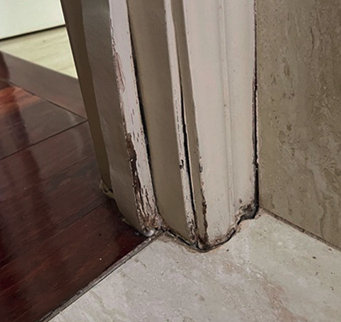
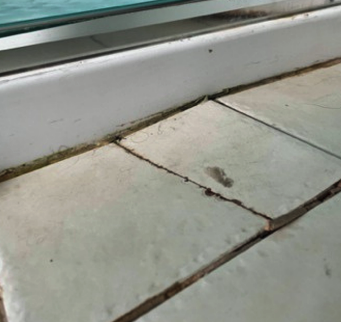
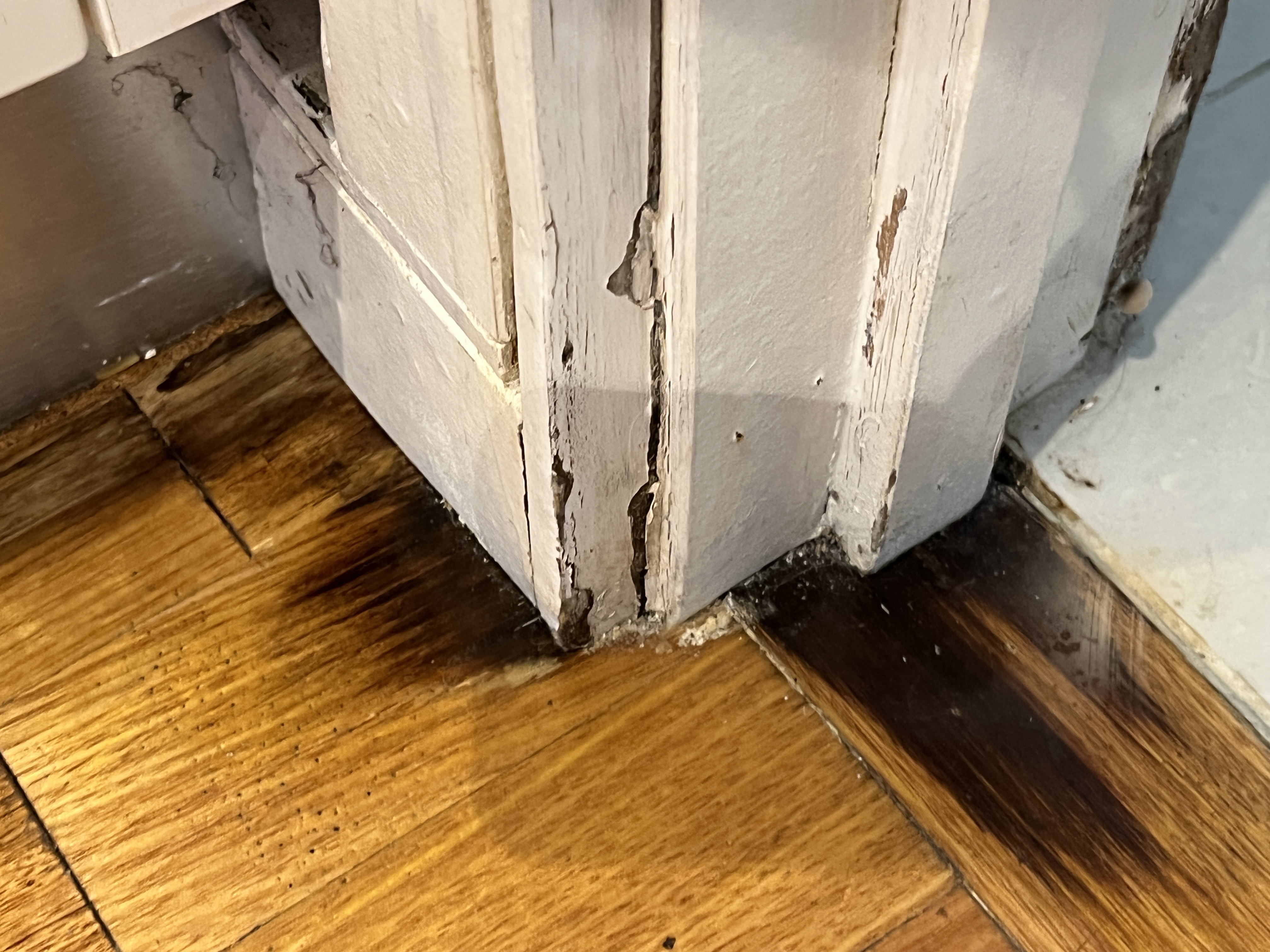
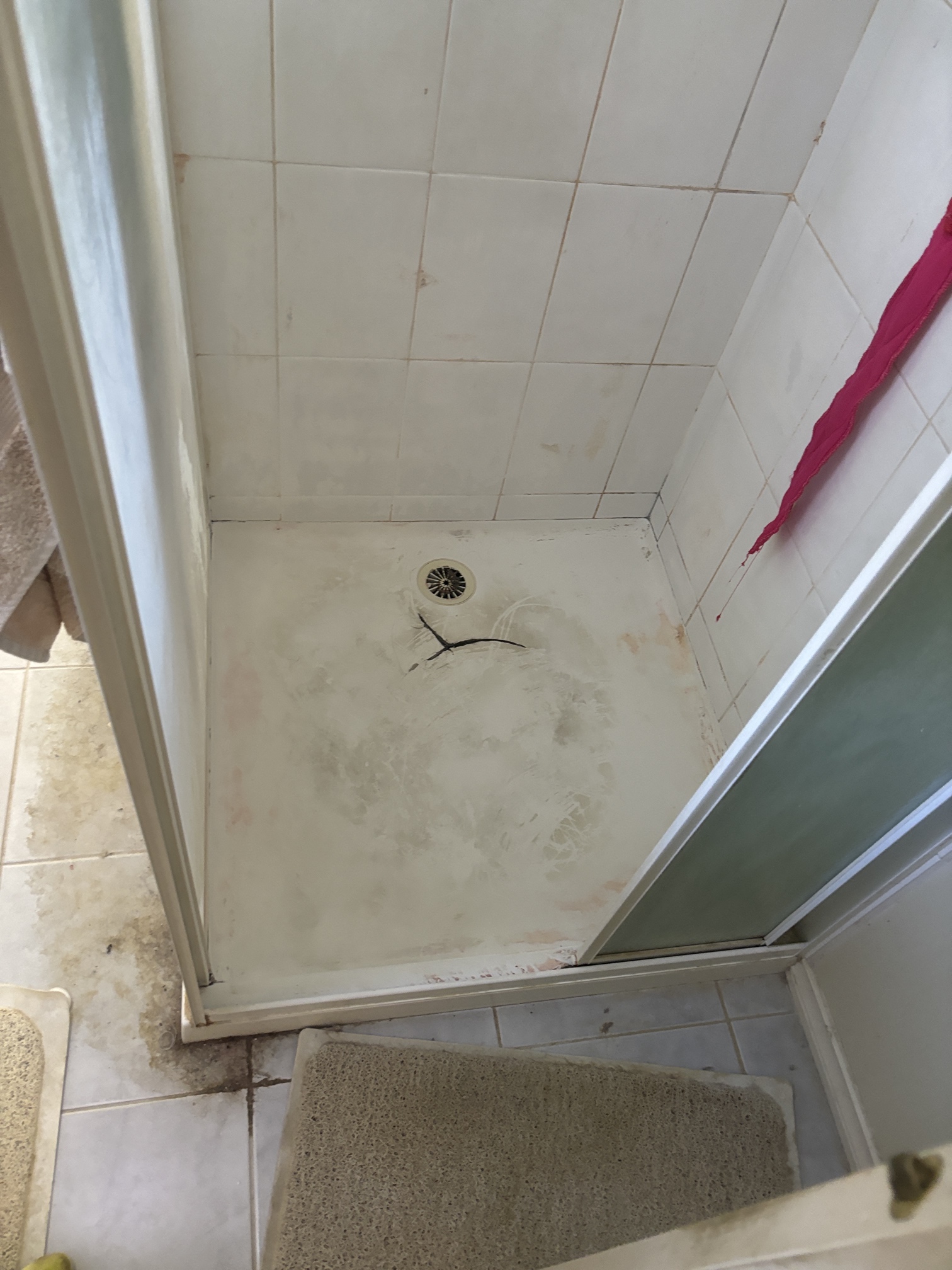
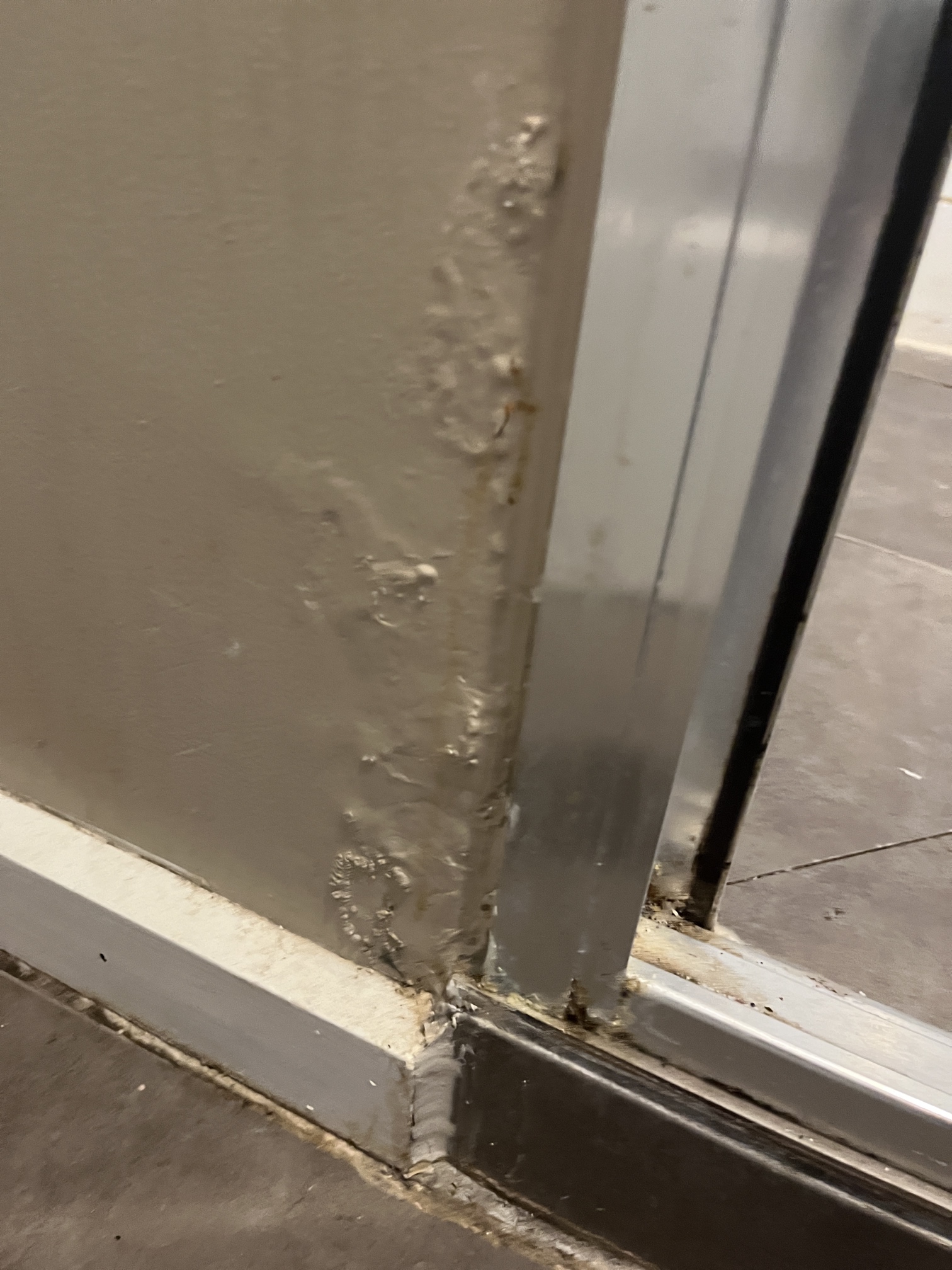
One of the most common signs of a leaking shower is water damage to plaster, architraves, or skirting boards. Showers often leak where the wall tiles meet the shower base or floor tiles. When the grout cracks or silicone breaks down, water seeps through and soaks into the plasterboard or wall sheeting behind the tiles. From there, it can travel along the floor or wall, causing timber frames, architraves, and skirting boards to swell or warp.
You might also notice water stains on walls or ceilings in rooms next to or beneath the bathroom. These are clear warning signs that your shower waterproofing has failed and needs attention before serious damage occurs

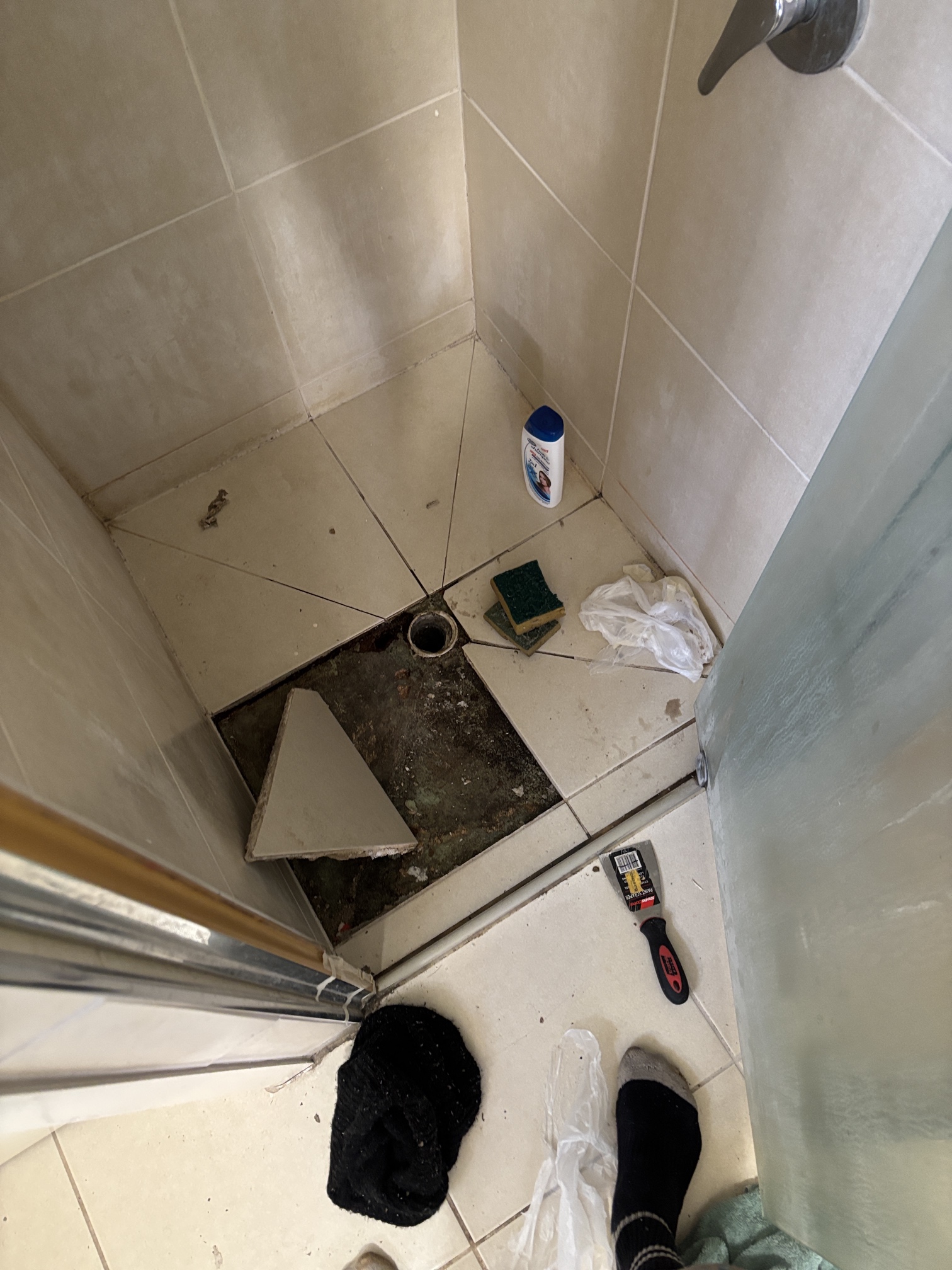
When water leaks beneath floor tiles and soaks into the subfloor, the trapped moisture causes the tiles to loosen and the grout to crack. Without proper waterproofing, the flooring can warp and shift, leading to uneven surfaces, cracked floor grout, and tiles that start lifting or coming away from the floor. In severe cases, water absorption and expansion can create a visible hump or raised section in the bathroom floor.

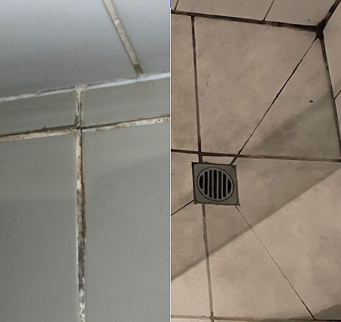
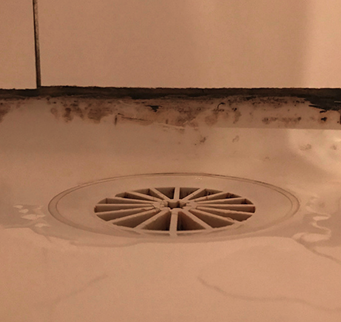
If the grout between the shower wall tiles and shower base tiles is missing, cracked, or constantly mouldy, it’s often a sign of a leaking shower. Many homeowners find that no matter how much they scrub, the mould keeps coming back. This happens because water is penetrating behind the tiles and saturating the wall lining — a clear sign that the shower waterproofing was never installed, or not installed correctly, in line with AS 3740 waterproofing standards.
Silicone can also develop mould that won’t clean off, as the mould grows from behind the surface due to water leaking behind it. In a properly waterproofed shower, this issue does not occur.

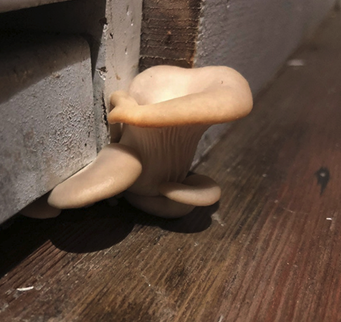
Some homeowners are surprised to find mushrooms growing near their shower or even in adjoining rooms. This happens because ongoing moisture and decaying subfloor materials create the perfect environment for fungi to thrive. In many cases, the same moisture problem also attracts ants and other pests. Both are clear signs of a leaking shower or failed waterproofing that needs immediate attention.

Acrylic and polymarble shower bases must be installed on a solid mortar bed with no gaps or hollow pockets. If there are voids beneath the base, it won’t have proper support and will flex under weight, eventually leading to cracks. Since these shower base shells are only around 10mm thick, full support from the mortar bed is essential.
However, even a well-installed base can fail if there are leaks from the wall linings or tiles. Water that seeps underneath the base can soften or break down the mortar bed, causing movement, instability, and premature cracking of the shower base.

Shower wall tiles should be installed so they sit flush with the shower base, allowing a neat and continuous bead of silicone to seal the junction between the wall tiles and the base. Tiles should never protrude or overhang the base, as this prevents proper sealing, traps water, and eventually leads to leaks.
A common issue occurs when the shower base has been “checked” into the wall too far or not far enough:
In some cases, the shower base is the wrong size for the space, and the builder has “made do” to make it fit. This improper alignment often results in poor sealing, water pooling, and eventual leaks.

If you look at your shower with the door open and notice that the lower wall tiles or floor tiles appear darker than the rest, it’s often a sign of a leaking shower. This happens when water seeps through cracks or gaps and penetrates the wall lining behind the tiles or the subfloor beneath them. The tiles become waterlogged, absorbing moisture from behind, which causes the darker, damp appearance.

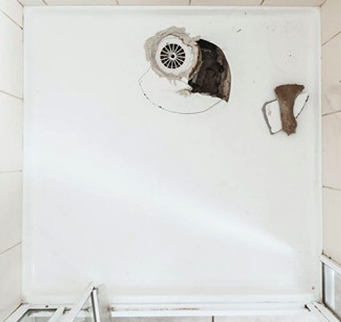
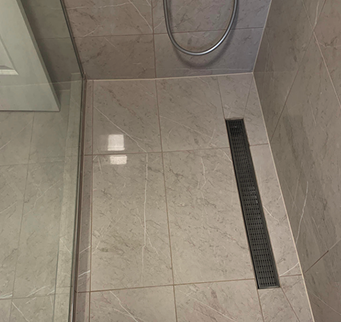
A shower grate must always be installed into a puddle flange, which acts as a barrier to ensure any water that seeps through the tiles and onto the waterproofing is directed into the plumbing system. For the system to work correctly, the shower grate must also have a connected pipe that sleeves into the puddle flange, ensuring water cannot escape anywhere except into the trap and drain.
The grate should be positioned at least 50mm away from each wall, as the puddle flange fitting is usually around 200mm in diameter. If the grate sits too close to a wall or appears misaligned, it’s often a sign that the puddle flange is missing or incorrectly installed, which can lead to leaks and water damage

To ensure your shower drains correctly and complies with current standards, the shower base must have a minimum fall towards the waste outlet:
How to check: Place a level on the shower base, with one end positioned at the waste and the other against each wall or edge. You should be able to measure the correct fall as per the ratios above.
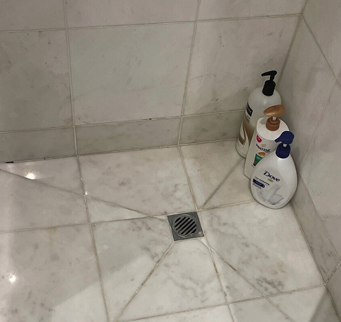
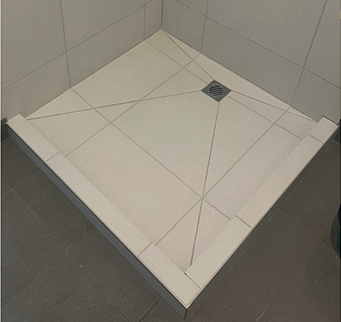
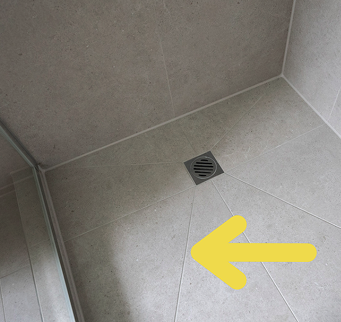
Visual indicator: A well-installed shower base typically has split tile lines running from each corner of the shower to the waste outlet. These splits help create the necessary slope for water to flow effectively. If the tiles appear flat, or if there are no visible splits, the shower base may not have sufficient fall, increasing the risk of water pooling and leaks.

A water stop is mandatory under NCC and AS 3740 to prevent leaks and ensure your shower is correctly waterproofed. It must be installed around the external perimeter of the shower base to contain water and direct it back to the waste outlet.
A compliant water stop can be:
A masonry hob is a reliable, durable solution because it:
Without a compliant water stop, your shower cannot meet AS 3740 waterproofing standards, increasing the risk of leaks, water damage, mould, and costly structural repairs.
Think your shower may have failed? Book a $159 Shower Assessment & Rectification Quote and we'll visually assess your shower and recommend the right rebuild.

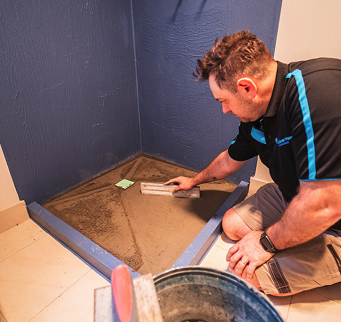
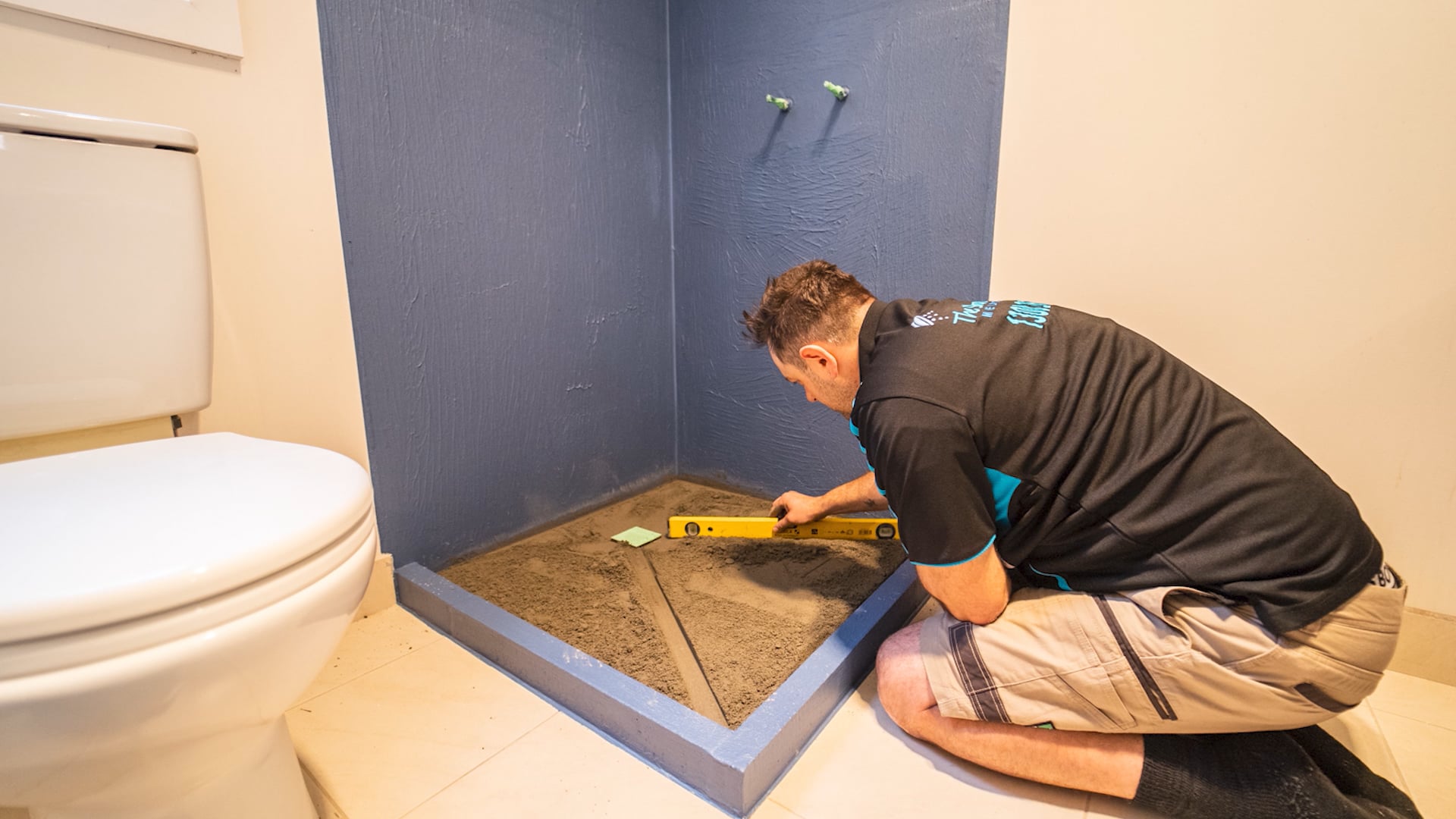
To ensure water drains correctly, a screed bed must be installed beneath the tiles to create the necessary slope. By law (AS 3740 and NCC standards), the minimum fall is 1:100 — meaning the floor must slope at least 1 mm for every 100 mm towards the waste outlet.
A quick way to tell if a screed has been installed is by looking at the height of the water stop or hob.

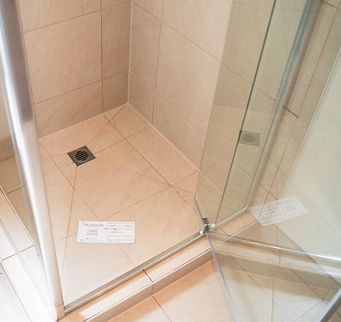
For a shower to drain properly and avoid leaks, the shower screen must sit flush with the inside edge of the water stop or hob. If the screen is installed too far back (on top of the hob), water can pool at the base of the screen, overflow underneath, and get trapped inside the shower screen frame — leading to mould, water damage, and premature failure.
It’s also critical that silicone caulking is applied only on the outside of the shower screen frame, never on the inside. This allows any water running down the glass and collecting inside the frame to drain back into the shower, instead of becoming trapped.

On a compliant shower base, the diagonal splits (tile gaps) connecting each corner to the waste outlet should be at least 1.5 mm wide, or the same width as the other grout lines on the base. Anything narrower than 1.5 mm won’t hold enough grout to properly fill the joint and bond to the depth required.
When tile gaps are too tight, the grout becomes weak, falls out over time, and allows water to seep underneath the tiles, leading to leaks and water damage.

To meet National Construction Code (NCC) requirements and ensure a watertight shower, the base tiles must always be installed before the wall tiles.
Unfortunately, many tilers install wall tiles first, then lay the base tiles during the same visit to save time — as wet base tiles can’t be walked on to tile the walls. This shortcut creates a major waterproofing risk:
This order of installation is critical to achieving NCC-compliant waterproofing, preventing hidden leaks and long-term damage.


Never allow any contractor to replace only the bottom row of tiles when replacing a shower base.
This is a recipe for disaster. It creates a break in the waterproofing membrane, which is non-compliant with Australian Standards and the Building Code.
As soon as your house experiences the slightest movement, the grout in the join will crack, and water will leak directly behind the walls, bypassing the waterproofing entirely. This will lead to major structural damage, and insurance companies could refuse future claims due to the non-compliant work.
A shower is never properly waterproofed unless the entire recess has been waterproofed in a continuous, seamless application. Anybody claiming they can join new waterproofing to old behind intact tiles will be doing a shoddy job. We regularly fix these failed attempts, costing homeowners far more in the long run. Get the job done properly the first time.


.jpg)
Here's a handful we see every week in and around Melbourne:
Professional Shower Assessment & Rectification Quote – $159
When your shower is leaking, cracked or showing signs of waterproofing failure, you need to understand what work is required to fix it properly. At The Shower Man Melbourne, we specialise in rebuilding failed showers and providing long-term waterproofing solutions. Every visit is carried out by our qualified, police-checked in-house team, never subcontractors.
Our professional site visit is designed to visually assess your shower, discuss the recommended rectification approach and provide a detailed quotation and proposed scope of works.
✔ Professional On-Site Visual Assessment, We assess the visible condition of your shower, including tiles, grout, silicone, shower base, junctions and other accessible areas.
✔ Waterproofing & Construction Considerations, We identify visible signs of potential waterproofing failure, deterioration or construction issues relevant to NCC and AS 3740 requirements.
✔ Recommended Rectification Solution, We explain the works we recommend to achieve a long-term solution rather than a temporary patch.
✔ Rectification Action Plan, We outline the proposed works, which may include demolition, substrate repairs, waterproofing, tiling and associated works.
✔ Detailed Quotation, We prepare a quotation outlining the recommended scope of rectification works and the associated costs.
If you’re considering rebuilding your leaking or deteriorated shower, our team can assess the visible condition and provide a professional quotation and proposed rectification plan.
Our $159 site visit is specifically for customers considering professional shower rebuilding or rectification works. It includes a visual assessment, consultation and a quotation outlining the proposed rectification works. We do not undertake leak detection, diagnostic testing, invasive investigations or provide written inspection reports.
Where a shower is leaking or shows signs of waterproofing failure or non-compliant construction, our minimum rectification service is a complete shower rebuild. Please only proceed if you are considering engaging us to carry out the recommended works.

We specialise in permanent shower rectification, not temporary leak repairs.
Where a shower is leaking or shows signs of waterproofing failure or non-compliant construction, the minimum rectification service we offer is a complete shower rebuild. We do not offer isolated grout or silicone repairs, waterproofing patches or other temporary treatments as solutions to a failed shower.
Rebuilding allows the existing shower finishes to be removed, exposed substrates to be assessed and necessary repairs undertaken before installing a new waterproofing system and tiled finish. Where damage extends beyond the shower, additional bathroom works may be required. The full extent of concealed damage cannot always be determined until demolition has commenced.
Our $159 site visit is a rectification consultation and quotation service, not a diagnostic leak detection or building inspection service. We do not provide:
✕ Specialist leak detection or water testing
✕ Plumbing pressure testing
✕ Thermal imaging or moisture mapping
✕ Invasive or destructive investigations
✕ Removal of tiles, walls or flooring for investigative purposes
✕ Testing to determine the precise source of a leak
✕ Formal defect or compliance reports
✕ Written diagnostic inspection reports
✕ Insurance or legal expert assessments
If you need detailed diagnostic testing or investigation before considering rectification works, please engage an independent specialist.

When we say you're getting a permanent solution... WE MEAN IT! That's why we offer our clients a "Problem Solved, Or It's Free"!
We don't install kitchens; we don't build decks; we don't repair gutters... WE FIX SHOWERS AND BATHROOMS! So, if you have a shower issue, call your local specialist today!
Amanda and Erol, founders and owners of The Shower Man, started The Shower Man in 2010 and have been in the industry for 30+ years... So they know a thing or two about showers and bathrooms!
The Shower Man is a locally owned and operated business located in Pakenham, Melbourne- Serving Melbourne Homeowners from Pakenham to Point Cook
We have the 'biggest and boldest' leaking shower guarantee, so you can be confident knowing that we can solve your shower problem!
10 Point Shower Man Guarantees
Problem Solved, Or
It's FREE Guarantee
Fixed Price
Guarantee
10- Year
Guarantee
Permanent Solution Guarantee
8 Point Quality
Inspection Guarantee
Best Intentions, Integrity Always Guarantee
Show Up
Guarantee
The Best You’ve Ever
Had Guarantee
Always There For You Guarantee
Work
Clean Guarantee